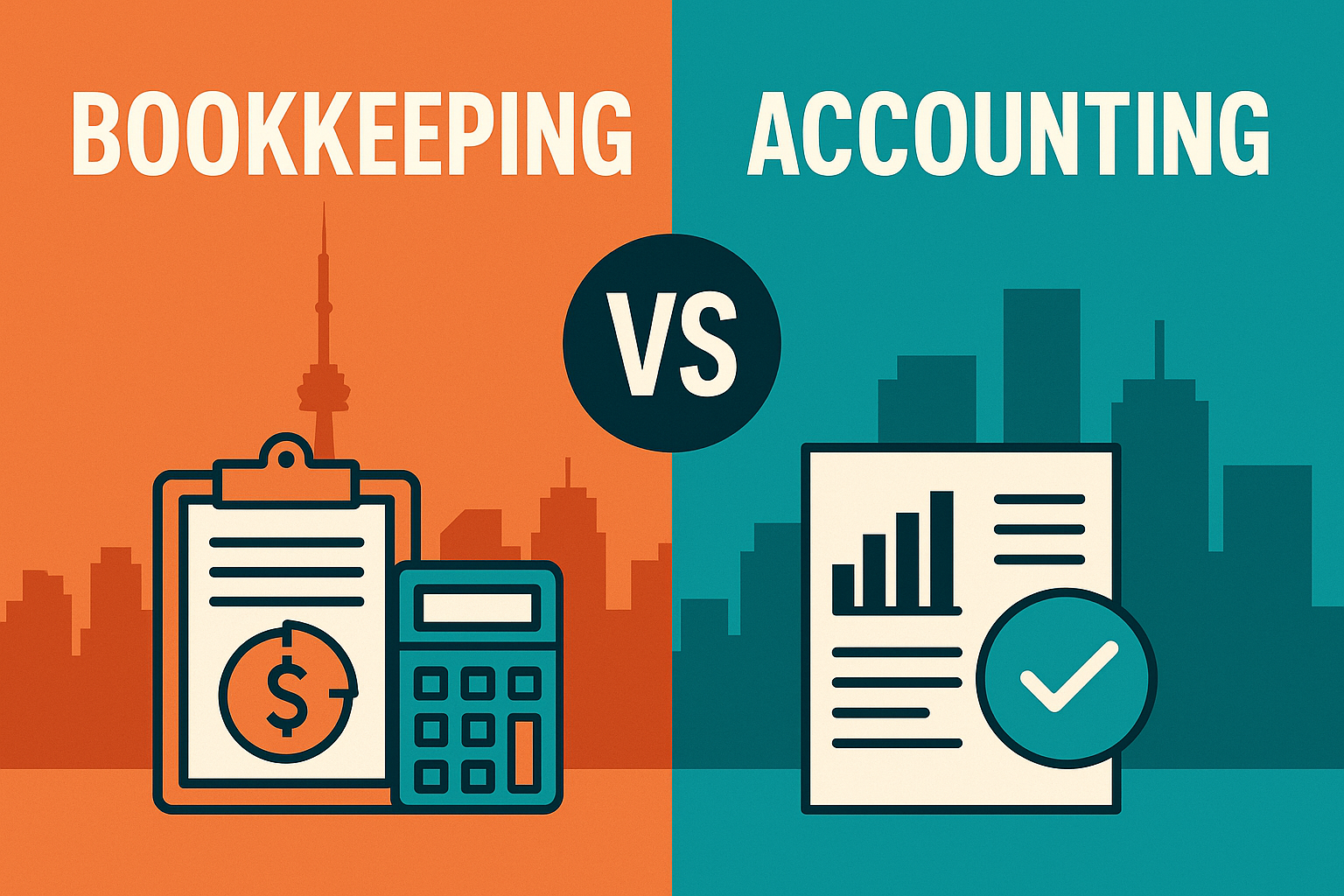

Running a small business means juggling a million tasks at once, from serving customers to managing inventory and staying on top of bills. Two of the most important yet often confusing tasks are bookkeeping and accounting. While they sound similar, they play distinct roles in helping you make smart decisions and keep your finances healthy. Let’s break it down in a fun, easy to read way so you know what each does and why you need both on your team.
What Is Bookkeeping
Bookkeeping is the foundation of your financial house. Think of it like keeping a detailed diary of every dollar that comes in and goes out. A bookkeeper records transactions such as sales, purchases, payments and bank deposits.
Key bookkeeping tasks:
- Recording invoices and receipts
- Updating ledgers and journals
- Reconciling bank statements
- Tracking payables and receivables
Every transaction is logged so you have a clear record of where your money is at all times. Accurate bookkeeping means no surprises when tax time rolls around.
💡 Pro Tip Regular reconciliations catch errors early, so you are never scrambling to fix months of mistakes.
What Is Accounting
Accounting takes all the raw data from bookkeeping and transforms it into meaningful insights. Accountants analyze financial statements, prepare reports and give advice on strategy. They help you understand profits, cash flow and tax obligations and guide you on how to grow.
Core accounting duties:
- Preparing income statements, balance sheets and cash flow statements
- Analyzing trends and margins
- Offering advice on budgeting, forecasting and tax planning
- Ensuring compliance with accounting standards and tax laws
While bookkeeping tells you what happened, accounting tells you why it matters and what you should do next.
Key Differences at a Glance
| Aspect | Bookkeeping | Accounting |
| Focus | Recording daily transactions | Analyzing overall financial health |
| Skill level | Basic accounting knowledge | Advanced training and certification |
| Output | Ledgers, journals and reconciliations | Financial statements analysis and reports |
| Timing | Transaction by transaction | Monthly, quarterly or annual |
| Purpose | Data accuracy | Strategic decision making |
Why Both Matter for Your Business
- Clean records lead to confident decisions: Without reliable bookkeeping you are flying blind. When numbers are organized, correct, and up to date, your accountant can dive in and give you solid advice.
- Stay compliant and save money: Good bookkeeping cuts down on errors that can trigger audits or penalties. Accurate accounting identifies tax credits, deductions and planning opportunities so you keep more of what you earn.
- Plan for growth: Bookkeeping shows you where money is going, accounting shows you where it should go. Together they help you budget, invest and expand with data on your side.
- Understand cash flow: Many businesses fail not because they are unprofitable, but because they run out of cash. Bookkeeping tracks inflows and outflows, accounting forecasts future cash needs so you can avoid surprises.
- Build credibility: Lenders, investors and partners want to see clean books and solid financial reports. Strong bookkeeping and accounting practices boost your reputation and open doors.
How to Get Started
- Hire professional: bookkeeping services or outsource in house with cloud tools
- Choose the right software: Tools like QuickBooks, Xero or Sage make recording transactions a breeze and integrate directly with banks
- Set a schedule: Block time weekly or monthly for bookkeeping and schedule quarterly check ins with your accountant
Final Thoughts
Bookkeeping and accounting are two sides of the same coin. One keeps the score, the other interprets the game plan. When both are done well, your small business gains clarity, control and confidence. So keep those records spotless, bring in expert advice and watch your business thrive.
Ready to take your finances to the next level? Contact our team today and let’s build a financial strategy as unique as your business.