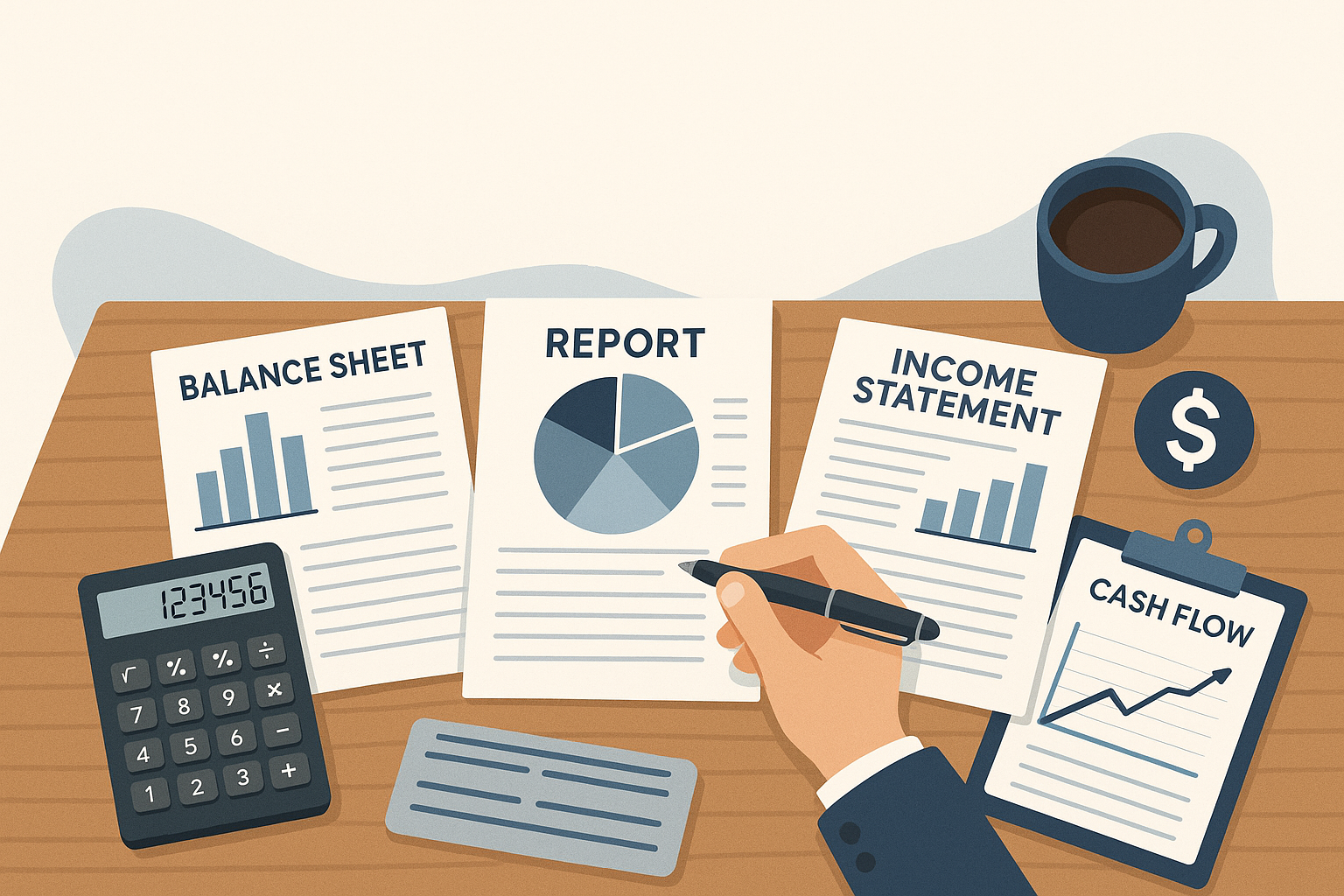

Staying on top of your numbers isn’t just for big corporations. For small business owners, a regular check-in on your financial reports is the key to spotting opportunities, avoiding cash crunches, and steering your company toward growth. Here’s a rundown of the five essential reports you should be pulling each month, and how they help you make smarter decisions.
1. Profit and Loss Statement (Income Statement)
What it shows
Your revenues, costs of goods sold, gross profit, and operating expenses over the month; essentially a scorecard of how much you earned (or lost).
Why review it monthly
- Spot Sales trends: Are sales climbing month over month? Is a new product line paying off?
- Gross Profit Margin on products & Services: Are you making enough on a per unit basis?
- Control expenses: Unexpected spikes in utilities, marketing, or payroll can signal waste or inefficiencies
Plan for taxes: Early visibility into taxable income helps you set aside the right amount for remittance
Tips
- Compare to last month and the same month last year
- Highlight any line items growing faster than revenue
2. Balance Sheet
What it shows
A snapshot of your assets (what you own), liabilities (what you owe), and equity (owner’s stake) at month-end.
Why review it monthly
- Monitor liquidity: Check your cash, accounts receivable, and short-term liabilities to ensure you can meet obligations
- Manage debt: Track loan balances and interest accruals, so you’re never caught off guard by payments
- Assess growth: Rising retained earnings and asset values point to a healthy, expanding business
Tips
- Watch your current ratio (current assets ÷ current liabilities). Aim for at least 1.5
- Look for seasonal swings in inventory or receivables
3. Cash Flow Statement
What it shows
How cash moved in and out of your business during the month; broken into operating, investing, and financing activities.
Why review it monthly
- Avoid cash surprises: Profit isn’t the same as cash. A profitable month can still leave you short if receivables pile up or you stocked up on inventory
- Plan for investments: Know when you have extra cash to upgrade equipment or launch a marketing campaign
- Manage financing: See how loan repayments or new borrowings impact your cash reserves
Tips
- Reconcile with your bank statement to catch timing differences
- Use a rolling three month forecast to anticipate dips
4. Accounts Receivable Aging Report
What it shows
Which invoices are outstanding, sorted by age (30, 60, 90+ days).
Why review it monthly
- Protect your cash flow: The longer an invoice goes unpaid, the less likely it will get paid in full
- Spot customer issues: Consistently late payers might need new payment terms or a gentle reminder
- Negotiate better terms: Strong receivables collections give you leverage with suppliers
Tips
- Automate reminders for invoices older than 30 days
- Offer small early payment discounts for your most reliable clients
5. Budget vs Actual Report
What it shows
“How we did” compared to “how we planned to do it”. Monthly variances on revenue and major expense categories.
Why review it monthly
- Stay on track: Large discrepancies can derail your financial goals if not addressed quickly
- Refine your forecasting: Use real time insights to make next month’s budget more accurate
- Hold your team accountable: Sharing variances with department heads drives cost control and revenue initiatives
Tips
- Focus on variances greater than 10% of budget
- Investigate both favorable and unfavorable swings
Putting It All Together
- Set a consistent schedule, block two hours at month’s end for pulling and reviewing these reports
- Use cloud accounting software: Platforms like QuickBooks or Xero automate much of the heavy lifting and offer built-in dashboards
- Discuss with your advisor, a monthly check in with your accountant helps translate numbers into actionable strategy
- Looking for extra support, consider our professional financial controller services to get monthly financial insights and guidance
By making these five reports a non-negotiable part of your monthly routine, you’ll gain clarity on your profitability, cash position, and overall financial health. That clarity empowers you to seize growth opportunities, head off problems before they escalate, and build a business that’s resilient and ready for what’s next.
Ready to streamline your reporting process and get expert insight on your numbers? Reach out to our team and let’s make your data work harder for you!