
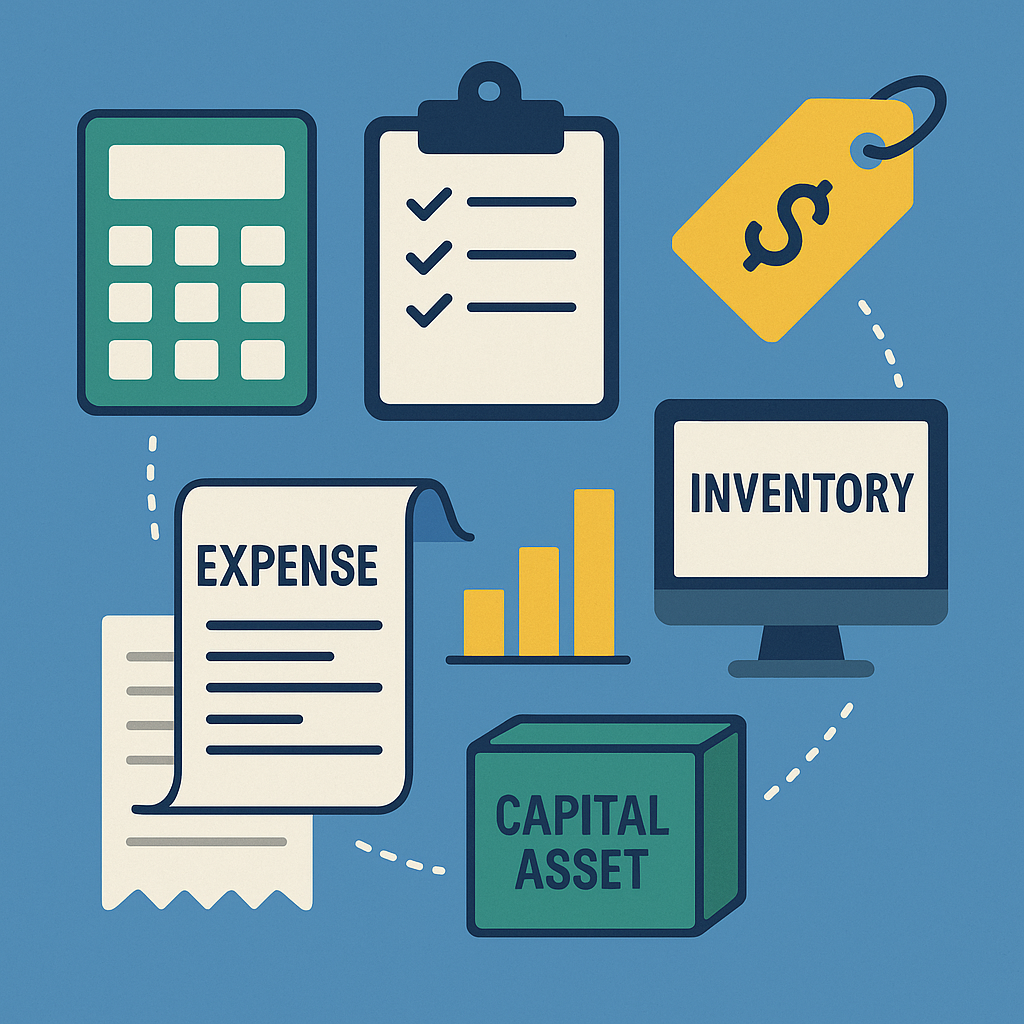

Running a small business comes with a million little decisions. One of the trickiest? Figuring out how to classify your spending. Is it an expense? Inventory? Or a capital asset? If you’ve ever stared at a receipt and thought, “Where the heck does this go?” you’re not alone.
Let’s break it down in a simple, no stress way that makes sense for any entrepreneur trying to keep their finances in check.
1. Expenses, The Day to Day Stuff
Think of expenses like your daily coffee habit, regular, necessary, and gone as soon as it’s used.
Expenses are the costs you incur to run your business. These are the usual suspects like:
- Rent
- Office supplies
- Internet and phone bills
- Advertising
- Software subscriptions
These are used up within the year and don’t stick around. They’re short term costs that help your business operate, and they’re recorded right away on your income statement.
💡 Pro Tip: If you use it and lose it within the year, it’s probably an expense.
2. Inventory, The Stuff You Sell
Inventory is what you buy to sell. It’s not something you’re using to run your business, it’s what your business sells to customers.
Let’s say you run a bakery. Your inventory would include:
- Flour
- Eggs
- Sugar
- Boxes you use to package cupcakes
Until these ingredients are baked into cookies and sold, they’re not expenses, they sit on your balance sheet as inventory. Once sold, the cost moves to your income statement as Cost of Goods Sold.
💡 Inventory Rule of Thumb: If it’s going out the door to a customer, it starts as inventory.
3. Capital Assets, The Long Term Players
Now we’re talking about the big ticket items. These are purchases that help you earn money over time. You don’t use them up in a day, or even a year.
Examples of capital assets:
- Computers
- Machinery
- Furniture
- Vehicles
- Intangible Assets (trademarks, patents, copyrights, or goodwill that add long-term value to a business)
- Research and development can count as an intangible asset if the R&D leads to a patent, proprietary technology, or software.
These assets are recorded on your balance sheet and depreciated over their useful life, which means a little bit of their cost is recorded each year as an expense. Why? Because they help your business make money over the long haul.
💡 Capital Asset Clue: If it lasts more than a year and costs a good chunk of change, it’s probably a capital asset.
Why Does It Matter?
Misclassifying purchases can mess with your taxes, your financial statements, and your ability to make smart business decisions.
- Classify an expense as inventory? You could delay deducting the cost.
- Treat a capital asset like an expense? You might trigger a tax audit.
- Miss a deduction? You could pay more in taxes than you need to.
- Are you not capitalizing expenses as assets? Then you’re understating profit and assets on your balance sheet, making your business look less attractive; especially when presenting to investors or banks for financing
Let’s Recap:
| Type | What It Is | How It’s Used | Where It Goes |
| Expense | Day to day operating costs | Used up within the year | Income Statement |
| Inventory | Items you buy to sell | Sold to customers | Balance Sheet, Income Statement (when sold) |
| Capital Asset | Long term tools for business | Used for years | Balance Sheet, depreciated over time |
At Vistance Accounting, we help Toronto’s small business owners make sense of their books, avoid costly mistakes, and feel confident in their financials. If you’re unsure about a purchase, we’re only a call or click away.
Need help classifying your costs? Let’s chat


